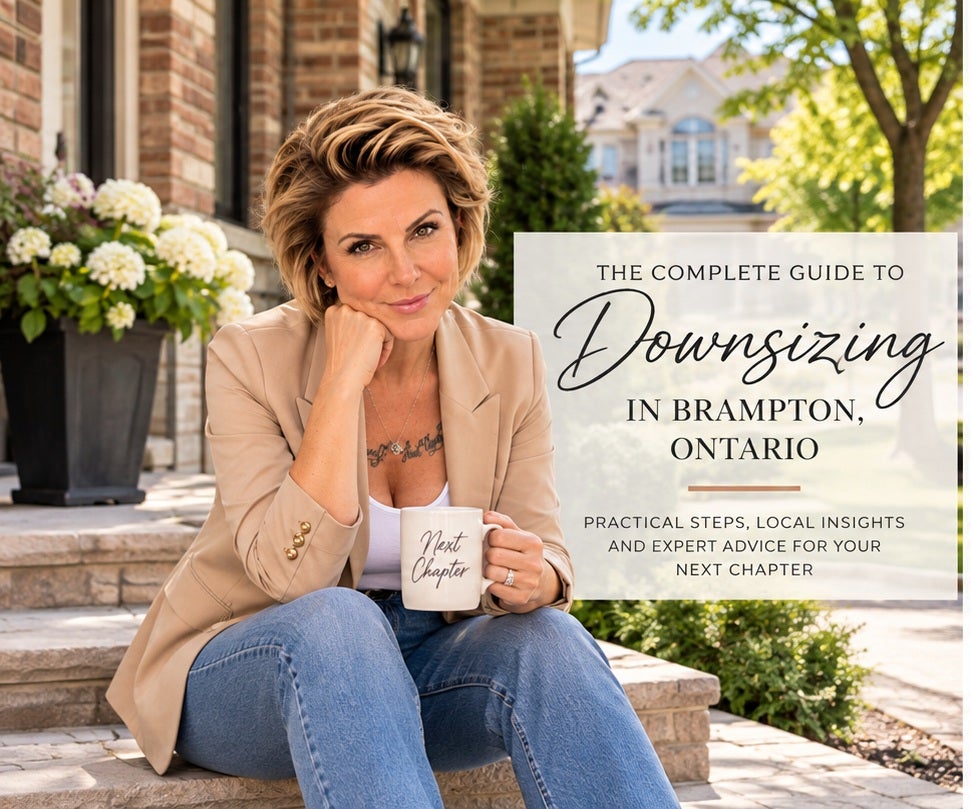
 A Thoughtful Approach to Selling Your Longtime Home and Planning Your Next Move
By Katie Dobson, REALTOR® | Royal LePage Real Estate Associates
Downsizing in Brampton means moving from a home that no longer suits your needs into one that better supports your lifestyle, finances and future plans. It may involve choosing a smaller house, bungalow, condominium apartment or rental property. The goal isn't necessarily to own less space. It's to have a home that works better for the way you want to live.
If you've lived in your Brampton home for 20, 30 or even 40 years, deciding to move can feel like a big step.
You've built a life there. You've celebrated milestones, raised a family, welcomed friends and accumulated belongings that tell your story.
And now, perhaps you're beginning to wonder whether you need all that space.
Maybe the stairs are becoming inconvenient. The garden takes more time than you'd like. Or you're simply ready for a different lifestyle.
Whatever has prompted the thought, you don't have to make every decision at once.
This guide will help you explore the practical, financial and personal considerations involved in downsizing in Brampton.
1. Is It Time to Downsize Your Brampton Home?
There isn't a particular age or life event that determines when someone should downsize.
For some homeowners, the decision follows retirement. Others want to move closer to family, reduce maintenance or free up equity for other priorities.
You might want to explore downsizing if:
Several rooms in your home are rarely used.
Maintaining the house or yard is becoming less enjoyable.
You would prefer fewer stairs or a different floor plan.
You want to understand whether your home equity could support a move.
Your current location no longer suits your daily routine.
You're ready for a lifestyle with different responsibilities.
The right time to downsize is when the benefits of moving are meaningful to you and the financial and practical arrangements make sense.
You don't need to wait until maintaining your home becomes difficult.
Equally, you shouldn't feel pressured to move simply because your house seems larger than you need.
2. What Is the Difference Between Downsizing and Smart-Sizing?
Downsizing generally refers to moving into a smaller home.
Smart-sizing is a broader concept. It means choosing a property based on how well it suits your needs, rather than focusing exclusively on square footage.
For example, a homeowner may move from a large two-storey house into a bungalow with a similar amount of main-floor living space.
The new home might not be dramatically smaller, but its layout may be more convenient.
Another homeowner might move from a detached house into a condominium apartment to change their maintenance responsibilities.
Smart-sizing asks a better question than “How small should I go?” It asks, “What kind of home will work best for me now and in the years ahead?”
3. Start With the Lifestyle You Want
Before looking at properties, think about how you'd like your everyday life to change.
Do you want more time to travel? Less outdoor maintenance? A guest bedroom for family visits? Space for hobbies?
Consider these questions:
Which rooms do I use regularly?
What do I enjoy about my current home?
What responsibilities would I prefer to reduce?
Do I want a private outdoor area?
Would main-floor living be beneficial?
How important are parking, storage and accessibility?
Do I want to remain in Brampton?
Would I prefer to live closer to family or familiar amenities?
Try to distinguish between features you genuinely need and features you've simply become accustomed to having.
A smaller property isn't automatically easier to maintain, and a condominium isn't necessarily the right choice for everyone.
4. Understand What Your Brampton Home Is Worth
Before deciding what you can afford to purchase next, establish an informed estimate of your current home's market value.
A professional home evaluation typically considers recent comparable sales, property type, location, condition, layout and current market conditions.
For example, a detached home in Heart Lake may require different comparable sales than a property in Peel Village or Bramalea.
A bungalow may also attract different buyers than a two-storey family home.
A property-specific evaluation is more useful for planning than relying solely on a general Brampton average or an automated online estimate.
Remember that an evaluation is an estimate, not a guaranteed selling price.
Why a Home Evaluation Matters Before Downsizing
Knowing your estimated selling price can help you:
Establish a realistic budget for your next property.
Estimate potential net proceeds after selling expenses.
Decide whether renovations are financially worthwhile.
Compare the costs of different housing options.
Discuss financing and retirement planning with qualified professionals.
Decide whether selling now is practical.
You don't have to be ready to list your home to request a home evaluation.
5. Compare Your Downsizing Options in Brampton
Brampton offers a range of housing styles. The right choice depends on your budget, preferences and the availability of suitable properties.
Bungalows
Bungalows may appeal to homeowners who prefer having principal living spaces on one floor.
However, not every bungalow is fully accessible or maintenance-free.
Review the entrance, bathroom layout, stairs to other levels, outdoor responsibilities and overall condition.
Condominium Apartments
Condominium apartments may offer a more compact floor plan and shared building maintenance arrangements.
Before buying, review the condominium fees, building condition, financial information, parking, storage and applicable rules.
Townhomes and Bungalofts
A townhome or bungaloft may provide a different balance of living space and maintenance responsibilities.
Pay close attention to the number and location of stairs, as well as the property's ownership arrangements.
Renting Instead of Buying
Some homeowners choose to sell and rent.
Renting may offer flexibility and reduce certain ownership responsibilities, but rental costs, availability, lease terms and long-term financial implications should be considered.
Adult-Lifestyle Communities
Communities such as Rosedale Village may appeal to buyers interested in a particular combination of housing styles and community amenities.
Review the property's actual features, ownership documents, costs and community rules before deciding whether it is suitable.
6. What Does It Cost to Downsize in Brampton?
Downsizing does not automatically mean spending less money.
The financial result depends on the sale price of your current home, the cost of your next property and the expenses associated with both transactions.
Potential expenses include:
Real estate commission and applicable HST.
Legal fees and disbursements.
Mortgage discharge costs or prepayment charges, if applicable.
Repairs, cleaning and moving expenses.
Storage and professional organizing.
Ontario land transfer tax when purchasing, subject to applicable rules.
Property tax, utility and other closing adjustments.
Condominium fees and possible special assessments.
Ongoing maintenance and insurance.
If you are buying another property, ask your mortgage professional and lawyer about financing, closing costs and any applicable obligations.
If you are relying on home equity for retirement income or investments, consult a qualified financial adviser.
Is Downsizing Always Financially Beneficial?
No.
A smaller property may have a higher purchase price than expected, substantial condominium fees or significant renovation needs.
A realistic comparison should consider both one-time transaction costs and ongoing monthly expenses.
7. Should You Sell Your Current Home Before Buying Another?
This is one of the most important decisions in a downsizing move.
Selling First
Selling first may provide greater certainty about your available budget and reduce the risk of owning two properties simultaneously.
However, you may need flexibility if you haven't found your next home by the time your sale closes.
Buying First
Buying first may allow you to secure a suitable property before putting your current home on the market.
But it may also create financing, carrying-cost and timing risks if your existing home doesn't sell as expected.
Neither approach is automatically best.
Your decision should reflect your finances, market conditions, property availability and tolerance for uncertainty.
Discuss any financing arrangements with your lender and lawyer before making commitments.
8. What Should You Fix Before Selling a Home You've Owned for 30 or 40 Years?
Longtime homeowners sometimes assume they must renovate extensively before listing.
That isn't necessarily true.
Start by identifying repairs that affect safety, function or the property's condition.
Then evaluate improvements that may help buyers understand and appreciate the home.
Common preparation priorities include:
Addressing known leaks or moisture concerns.
Repairing damaged fixtures or finishes.
Cleaning and decluttering.
Improving lighting.
Refreshing paint where appropriate.
Maintaining landscaping and exterior presentation.
Organizing records of major improvements.
A full kitchen or bathroom renovation may not be necessary.
Before spending significant money, compare the likely cost with the potential market benefit.
9. What Should You Do With Decades of Belongings?
For many longtime homeowners, sorting through possessions is one of the most demanding parts of downsizing.
Furniture, photographs, family keepsakes and everyday objects can carry memories.
Rather than trying to clear the entire house at once, start with a manageable area.
A Practical Four-Decision Method
Keep: Items you use, need or genuinely want in your next home.
Share: Belongings you'd like to give to family or friends.
Sell or Donate: Items in suitable condition that you no longer need.
Recycle or Dispose: Items that cannot reasonably be reused.
Before giving away valuable, sentimental or estate-related belongings, confirm that you have the authority to do so.
Measure important furniture and compare it with the floor plan of your next home.
You may find that you want to keep fewer things once you know where you're moving.
10. Build a Moving Timeline That Works for You
There is no universal downsizing schedule.
A homeowner with a clear destination and a well-maintained property may need less preparation time than someone sorting through decades of belongings or coordinating a complex purchase.
Six or More Months Before a Possible Move
Begin exploring your reasons for moving, preferred locations, housing options and estimated home value.
Review your finances and start sorting items you rarely use.
Three to Six Months Before a Possible Move
Refine your property search, obtain a more detailed evaluation and discuss a selling strategy.
Identify repairs, review moving services and consider your preferred closing timeline.
One to Three Months Before Listing
Complete agreed preparation, organize documents and make arrangements for photography, marketing and showings.
The actual schedule should be adjusted to your needs and current market conditions.
11. What If Your Spouse or Family Isn't Ready?
It's common for family members to feel differently about moving.
One person may be excited about a simpler lifestyle while another is deeply attached to the family home.
Instead of beginning with the question, “When are we selling?”, try discussing what each person wants their future living arrangements to look like.
You can explore homes, review costs and understand your options without committing to a move.
The objective is an informed decision that respects the people involved.
12. How Can Katie Dobson Help With Downsizing in Brampton?
I'm Katie Dobson, REALTOR® with Royal LePage Real Estate Associates.
I've worked in real estate since 2019, and my areas of focus include Brampton, Rosedale Village, downsizing, smart-sizing and estate property sales.
My role is to help you understand the real estate decisions involved in moving from your current home to your next one.
Depending on your circumstances, that may include:
Reviewing your home's estimated market value.
Discussing whether and when to sell.
Evaluating property preparation and pricing options.
Explaining relevant housing choices.
Coordinating the sale and purchase timelines.
Reviewing offers and negotiating transaction terms.
Helping you identify questions for your lawyer, lender or other professional advisers.
My MCNE® and ASA® designations complement my approach to negotiation and real estate advice.
You can begin with a conversation, even if you're not ready to move.
Frequently Asked Questions About Downsizing in Brampton
When should I start planning to downsize?
Start when you're seriously considering a change in your housing needs. Early planning allows time to review finances, evaluate your home, explore properties and organize belongings without an immediate commitment to sell.
Do I need to renovate before downsizing?
Not necessarily. A property evaluation and preparation review can help identify which repairs or improvements may be worthwhile.
Is it better to downsize into a bungalow or condo?
Neither is universally better. Compare layouts, accessibility, maintenance responsibilities, fees, storage and total ownership costs.
Can I use the equity in my current home to buy another?
Potentially. The amount available depends on your selling price, mortgage obligations, selling costs and other financial considerations.
What if I've lived in my home for 40 years?
You can begin gradually. Start with a home evaluation, discuss your priorities and organize belongings in manageable stages.
Do I need to sell my Brampton home before buying in Rosedale Village?
Not necessarily. The appropriate sequence depends on financing, property availability, market conditions and your circumstances.
Are there tax consequences when downsizing?
There may be. The principal residence exemption can be relevant to qualifying property sales, but reporting obligations and other tax considerations may apply. Seek advice from a qualified tax professional.
Can I downsize without leaving Brampton?
Yes. Depending on availability and budget, you may find suitable housing options within Brampton.
What if I'm not ready to move?
You can still explore your options. A preliminary consultation and home evaluation can help you plan without committing to a listing.
Your Next Chapter Doesn't Need to Begin With a For Sale Sign
Downsizing is a personal decision.
It may involve financial planning, family conversations, difficult choices about belongings and the excitement of finding a home that better fits your life.
You don't have to figure it all out in one weekend.
Thinking about downsizing in Brampton?
Let's start with a conversation about your current home, your goals and the options available to you.
Request a Complimentary Brampton Home Evaluation or Downsizing Consultation
Visit www.yourrealtorkatie.ca to get in touch.
Katie Dobson, REALTOR®
Royal LePage Real Estate Associates
Brampton | Rosedale Village | Downsizing | Estate Property Sales
*This guide provides general real estate information. Legal, tax and financial questions should be reviewed with appropriately qualified professionals.